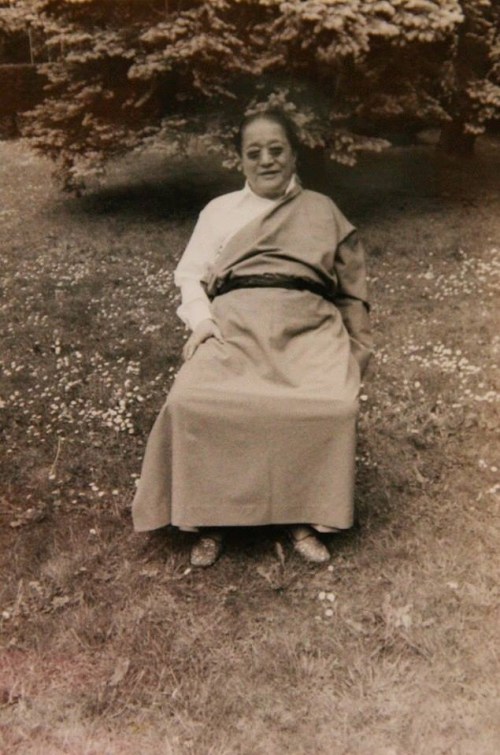
Bodhichitta means to help and benefit others.

Sangye Pema Shepa, Dudjom Rinpoche III

“Bodhichitta means to help and benefit others.  It means to refrain from harming anyone or anything.  It means to be free from fighting, discord, evil thinking, arguing, and disturbing others.  If these things are present, it means it isn’t Dharma. It isn’t Buddhist Dharma. The Buddhist tradition involves refraining from all harm and striving to benefit others.  And this does not mean benefit for just one single lifetime – it is a vision of benefiting others throughout countless lifetimes. From one birth to the next, from one lifetime to the next, the view of benefiting others and establishing them in permanent happiness is carried forth.  This is held as the basis for all actions according to our Buddhist tradition.”

~ H.H. Dudjom Rinpoche III  Sangye Pema Shepa

What is virtue?

What is evil? What is negativity? Evil is action that harms others. Moreover, it is said that not only should we refrain from harming others in the present, we should refrain from doing things to harm ourselves in the future (as the result of evil karma). Again, what is virtue? It is the good heart, the wish to benefit others. This is what we call bodhichitta. If we have a good heart, wishing the welfare of others, and if we bring benefit to others and to ourselves, we are practicing virtue. Virtue depends exclusively on a good heart. We may well recite the refuge prayer, but if we harbor evil thoughts, it is meaningless. As the saying goes, “With good motivation, all the grounds and paths are excellent. With evil motivation, all the grounds and paths are ruined.” 41 A good motivation, a good heart—this is what we must have at all times. This is the Dharma and nothing else. It is not something grandiose or elaborate.

Counsels from My Heart by Dudjom

41.  sa, ground or level, and lam, path. The practice of the Mahayana is divided into five paths (of accumulation, joining, seeing, meditation, and no-more-learning), which are gradually traversed as the practitioner progresses toward buddhahood. The third path, that of seeing, is the point where the practitioner has a direct experience of ultimate reality. There then begins a second system of grounds or levels of bodhisattva realization, which extends from the path of seeing through the path of meditation and culminates in the attainment of the path of no-more-learning, buddhahood.


Subdue Self-clinging

… the purpose of all the teachings in the Great and Lesser Vehicles can be condensed into a single point: to subdue self-clinging. As we practice, therefore, we should be reducing our self-cherishing. If it does not act as an antidote to the ego, our whole practice of Dharma will be pointless. Whether or not the practice we do is actually the Dharma depends entirely on this, which is why it has been said that this is the scale on which those who practice the Dharma are weighed. Of course, other people who see you may testify to your being an authentic Dharma practitioner, but ordinary, worldly people cannot know what is hidden in your mind. You might feel pleased at having done one or two good deeds, but the real signs of having trained one’s mind in bodhichitta are that one is not ashamed of oneself and that one is always in a happy frame of mind, whatever difficult or painful situations one finds oneself in, because rather than getting depressed about them, one takes them as aids to the practice. Nevertheless, while these may be indications that one has really gone to the heart of the teachings, they do not mean that one does not need to train further. So, until you attain Buddhahood, train in the precepts to make bodhichitta grow more and more.

A Torch Lighting the Way to Freedom: Complete instructions on the preliminary practice of the profound and Secret Heart Essence of the Dakini
by Dudjom Rinpoche Jigdral Yeshe Dorje
translated by the Padmakara Translation Group.—1st ed.