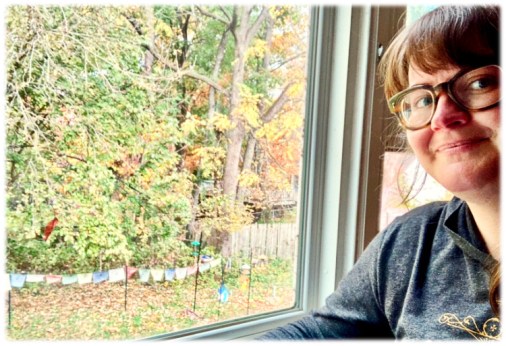
My Ngondro ♥️BarbaraAnne Rich

I first took refuge in 1993 with Thich Nhat Hahn and also practiced Theravada with Bhante Guneratana. 

When I moved to New Mexico in 2001  I met Lama Shenpen Drolma, a student of Chagdud Tulku Rinpoche, and took refuge with her. After completing 100.000 Red Tara mantra I received teachings on Ngondro and began practicing. I think that was 2009. I did not get empowerments for Vajrasattva and Guru Rinpoche until 2012 when Getse Rinpoche came to the ranch.
At first I could do few prostrations, maybe 3 or 6 out of a hundred but was permitted to circumambulate the Guru Rinpoche statue for a lot of them. By the last 20,000 I could do 200 prostrations at a time. But some days I had too much pain and so would substitute circumambulation 2 for 1. I would have been too proud otherwise. I finished, in retreat at Iron Knot, in March of 2020.At that time Iron Knot essentially closed and I did not get back there in person until spring of this year.Meanwhile, many wonderful teachings began to appear on line including offerings from Pema Osel Ling. I think Ngondro is the first one I signed up for. And I am so grateful for the teachings and practice and hang-out time. Especially I appreciate accumulation sessions, practicing in a group. I learned with you how to do the whole practice every time and it was so joyful. And through the Covid times I plugged away at accumulating mandala offerings at the rate of 200 a day, which is all my body could do, and completed 100,000. I think this was 2022 or 2023. I had completed Vajrasattva and was really looking forward to accumulating 1,200,000 12 syllable mantras. I had completed between 4 and 500,000. And I just stopped. I continued Ngondro without accumulating. But always since 2017, when Getse Rinpoche told me in a vision to do 7 line prayer, that has been my main practice everyday without fail.

So this spring I returned to Iron Knot for the first time since Covid and went straight to Getse Rinpoche’s stupa holding my Bodhi seed mala and prepared to offer mantra accumulations. But as soon as I stepped on to the stupa patio the mala broke. I laughed and offered it to Rinpoche.

When I told all this to Lama Shenpen, she said it’s enough. You don’t have to count anymore. Offer Tsog.
It’s not about counting. It’s about heart. I am not finished with Guru Rinpoche — I do 7 line and Vajra Guru most of the time.

I am so grateful to you for all your help. It really enriched my experience.

Sincerely
♥️BarbaraAnne Rich

Taking up Practice in the Tradition of Dudjom

“The Dudjom Tersar lineage is fresh, vivid, direct, and with no loss of meaning, words or blessing. These teachings, coming from Guru Rinpoche to Dudjom Rinpoche, and then to us, is a direct short lineage. Therefore, because this lineage is uncontaminated and knows no degeneration by broken samayas, the blessing and attainments are immediate”.   

~ Words of Lama Tharchin Rinpoche

Hearing a recording of Lama Tharchin’s introduction to the Ngondro of the Dudjom Tersar, and feeling the dedication and genuine wish of Lama Tharchin to share with all perhaps the greatest treasure of a human birth, was as kindling to me to take up the practice of the Dudjom Tersar Ngondro. 

From the beginning, the care and concern of the Lamas, facilitators and mentors of the Dudjom Tersar at Pema Osel Ling made it impossible to resist making a commitment to practice.  In so many ways, taking up the practice has felt continually easeful, never tedious or contrived, and always seems to open doors and clarify things in both inner and outer worlds, in inconceivable ways. 

Also from the beginning, an understanding has dawned that the Ngondro will never end, fortunately so, as it now serves every day to stabilize practice and give an orientation for every moment of life.

This past week, my wife Felicia and I had the precious opportunity to visit Pema Osel Ling, and take part in the long life ceremony of Yangsi Gyana Ta Rinpoche, whose previous incarnation helped to deeply root the Dudjom Tersar in the care of Lama Tharchen and Lama Sonam.  Thinley Norbu’s voice and devotion resound on the recorded sung verses of the Ngondro that is the brief daily practice, and that  turns attention directly towards the lineage of Guru Rinpoche and the Ngondro practice that brings us to union with his enlightened intent and benefit to our present world.

Dorje Drolo inside of the Red Dorje Drolo Stupa Mandala at Pema Osel Ling


The Red Dorje Drolo Stupa Mandala at Pema Osel Ling is dedicated to Dorje Drolo, a “crazy wisdom” manfestation of Guru Rinpoche who vowed to guide and bless us during the intensity of our present world conditions.  The Stupa Mandala radiates peace, sanity and the ability to attain a stability in a chaotic world: the same soothing balm that comes from the Dudjom Tersar Concise Ngondro practice.

Testimonial by Charles Smith who finished his Dudjom Tersar Ngondro in the Fall of 2024


Carving Out Space in My Life for Practice and Cultivating the Motivation

~ Ben Karlsen

When I first began my ngondro right before the start of the COVID-19 pandemic I was planning on finishing within three years. I had assumed I was dedicated and focused enough to manage to practice at least a couple hours a day and finish within that time frame. Within a couple months, however, my initial burst of motivation had burned out. I was only accumulating a decent number of any of the sections in sporadic bursts, and even when I did sit down to practice (or stood up in the case of prostrations) it was not always the case that I was focused, or that I really meant all of the words I was reciting in the liturgy. There was certainly a part of me that really did, and actually considered the Vajrayana path the most important part of my life, but at the same time my time and attention was caught up in a dozen other parts of my life.

Part of the issue was that my initial connection with the dharma was more on the intellectual and emotional side of things. I would spend time studying and carefully considering everything I was reading, but that activity was not necessarily closely integrated with how I would spend my time on a daily basis. That is not to say I would treat people poorly, behave in overtly self-destructive ways, or that whatever connection I felt with the Dharma was “just words”, but rather that most of my time was still spent on relatively pointless activities. It was easy to waste away endless hours on cheap entertainment and distractions, or even at work, but somehow it was much harder to sustain even a couple hours of focused Dharma practice each day.

In many ways it was a question of renunciation and refuge. If I felt lonely, dissatisfied, disoriented or confused, if things did not go the way I wanted them to or I was dealing with pain and exhaustion, how would I orient myself towards those difficulties? Where would I look to find some kind of relief? To what extent did I still think that pursuing wealth, entertainment, romance, or worldly success would bring lasting satisfaction to the restless desire and dissatisfaction that drove me on a daily basis? That is not to say that these things have absolutely no value or are strictly “bad”, but what portion of the desire and motivation I felt on a daily basis, and perhaps more importantly what portion of the time and effort I would expend on a daily basis, was directed towards worldly goals (both large and small) as opposed to the Dharma? And if I told myself that I had chosen to follow the Vajrayana path, and that all these things could be carried onto that path, to what extent was I actually doing that?

More often than not when I sat down to practice in the morning I was already anticipating everything else I wanted or needed to do during the rest of the day, or recalling the events of the previous day, and the session would become a tug-of-war between ngondro and whatever else was drawing my attention away. Even when I was more focused, it was still far too easy for something as profound as the recollection of the Four Thoughts at the beginning of a session to become merely another habit. Like entering into a room I had seen a thousand times before, I did not look very closely but instead simply skimmed across the surface of the meaning of the words.

As much as all of this may sound relatively self-critical, I really do not mean any of this in a harsh or self-deprecating way. Working my way through all of this, to whatever extent I have managed to begin that process, has been important and necessary. I was not born with my life and daily habits already structured in a way that was integrated with Dharma practice. I did not even grow up with a close connection with any Buddhists, nor did I really know (or seek out) any other Buddhists for the first five or so years after beginning to connect with the Dharma. I simply grew up around other members of my generation and developed my daily habits along the same lines as most everyone else in modern secular America. The inertia of all of those habits was not something that easily dissipated simply because I chose to begin practicing ngondro, and transforming those habits is something that takes time and effort.

Fortunately, even if there was something habitual and repetitive about the manner in which I engaged with ngondro most of the time, even just skimming across the surface of the meaning of each section each day would keep everything close to the surface of my mind. At times the significance of one or another of the sections of the ngondro would hit me in a much more meaningful way, but often that was not actually during sitting practice but rather while just driving to work or going about my daily activities. However, as time went on those moments became more and more frequent, and most importantly they began to become more integrated with my baseline state of mind and daily habits.

After a couple years of sporadic practice I reached the point where I had finally become relatively consistent in my practice, and beyond that I was becoming increasingly exhausted by the parts of my life that consumed my time but meant relatively little to me. I was not in a place in life where it would make sense to engage in a full-time retreat, but at the very least I could take finishing my ngondro seriously.

Around the same time Pema Osel Ling began to open up again after the first couple years of COVID restrictions, so I was able to go to the yearly ngondro retreat for the first time. That time I just stayed for the first weekend, but the year after that I stayed for the full retreat and really enjoyed my time there. In many ways the value of going to the retreat, at least for me, had more to do with beginning to form a connection with the community at Pema Osel Ling than clarifying the practice in a more technical sense. The Dudjom Ngondro Program has plenty of resources available to help make all of the details of the practice clear and easy to follow, there are many wonderful ngondro commentaries in publication at this point, and I had already been practicing for a couple years before I first went. However, in the Vajrayana so much depends upon human relationships, and there really isn’t a substitute for connecting with others in-person. Everyone there was extremely welcoming and helpful, and I really had the sense that it was a community that could support me not just for ngondro, but for however far along the Vajrayana path I was able to travel in this life.

During those last couple years I managed to push through and finally finish my ngondro. In the end one of the main benefits was simply learning how to carve out space in my life for practice, and cultivating the motivation that drove that process. On many levels I still feel like I am just beginning to work on all of the foundational aspects of the path laid out in the ngondro, on renunciation and refuge, on Bodhicitta and generosity, on maintaining stable mindfulness in practice and life, and all the rest. But in many ways these “basics” are both the foundation and the final aim in the Vajrayana, and everything I aimed to cultivate in the ngondro will remain a central focus of my practice and life going forwards.


First Druptas’ Testimonial

Source: Dudjom Tersar Ngondro Instagram Stories

Following below is a page from the Lotus Light Newsletter from 1997 with testimonials from the the first three drupta graduates: Marc Schmitz, Stefan Graves and Marc Nyima Olmstead Lotus Light was an early printed newsletter publication for the Vajrayana Foundation. It was published quarterly and mailed by USPS to everyone on the mailing list, member and non-member alike.

Lotus Light News from the Vajrayana Foundation January 1997 Vol 4 No 1


Drub Nyiy Döjö Gatsal Three-Year Retreat “The Joyful Grove that Provides Both Kinds of Accomplishments”

Drub Nyiy Döjö Gatsal is a three year retreat center in the Nyingma School of Tibetan Buddhism, specifically in the Dudjom Tersar Lineage. It was was established by Lama Tharchin Rinpoche in 1992 as part of a far reaching vision to bring the study and practice of the Dharma in its entirety to the West, where he taught and continuously, oversaw many three year retreats, until his Parinirvana in 2013.  JOINING THE NEXT RETREAT The Vajrayana Foundation is now accepting applicants for the next three year  retreat, which will begin after Tibetan New Year in early 2024. If you have been contemplating taking a leap with your practice and if this long-term traditional group retreat setting resonates with you, please write a preliminary letter of intent using the questions asked in the Preliminary Motivation Letter as a guideline and email it to drubdra@vajrayana.org. We have begun the process of reviewing applications and look forward to hearing from you.


A Journey of a Ngondro Student

There was a subtle and quiet inner knowing that I needed to go to Pema Osel Ling in California, that slowly grew and became more clear over about three years of an online connection. 
It kept returning over years of slowly doing Ngondro accumulations, studying each day, endless reading and learning, and keeping a connection going as best as I could. Joining in. Integrating. Coming and going.
A strange inner pull to take a sacred pilgrimage, that I could not ignore. A heart pull, a different pull that I could not quite explain. The result of experiences of connection, softening, beauty, blessings, transformation, lineage, prayers, practices and these teachers that appeared before me. I fell in love with the prayers and words. I changed in many ways, and I slowly became stronger.
My whole life had become my practice, as imperfect as that may be at times, but devoted and engaged and transforming.
And then the pull to receive Troma Nagmo empowerment there started one year before going. Another reason to go.
But it would mean returning to a place where I had been 30 years before, and where a profound loss had occurred when my Aunt Anne disappeared as a homeless woman on the streets of San Fransisco around 2000, so resistance was there. Not quite wanting to return there. But still I knew that I had to go. 
I had to walk through my fears as they arose, prepare over time, and gather the support that I needed to make the journey.
It was a decision that took courage, and a walking out of the door of my comfort zone, vulnerable and uncertain, into the world. To fully embrace my journey and its challenges, to allow myself to be supported, to handle the difficulties that arose. And arrive.
Flying in over San Fransisco, warm tears fall in fully facing the loss of my Aunt Anne years ago, but reclaiming my place here in a new way. A new happiness replacing the old loss.
The magic of the crazy, winding road through hills of green redwood trees delighted me, and gave me a feeling of joy and freedom, and the kindness that greeted me was so appreciated. I felt a sense of softening and relief during my brief stay, and all that occured happened so easily and meaningfully.
A first and unexpected encounter with Lama Sonam in the shrine room on Saga Dawa, so suddenly appearing, was quickly and briefly embraced, and the opportunity to offer him a white silk khata scarf to honour him and show my deep gratitude for all that I had learned from him over three years was so profound and precious, and deeply felt. It changed me, and brought me a sense of deeper peace in my heart, a calming, having done something I deeply needed to do. So grateful, so fulfilled. At peace, more restful. Offering my appreciation as a humble Ngondro student. Happy tears shed in the shrine room. Feeling so blessed. Knowing that this was an important moment in my life. A deep happiness.
Jumping in to practice with others in the shrine room, and feeling held and supported by older students and a sangha together. Finding my place as myself, as I am, flaws and all. Entering, learning, showing up. The fullness of the experiences in the shrine room bringing it all alive for me, finally. Deeply felt and enciountered. Meeting new heart friends, learning from them, listening to them, being with it all, and then letting go.
The rewards of a journey taken, very much worthwhile, returning to feel more settled, and a deeper peace in my heart. Right timing, and everything coming together with ease and support. Feeling a new peace that was not there before. A difference in my embodiment and sense of self. A heart connection in the world, and trusting a new path.
The journey continues back into the world and in my return, back to being more alone on my path, but stronger, and knowing that I need to return when I can.

Dedicating my merit to my Aunt Anne, who disappeared in homelessness in California many years ago. May she be blessed and protected by the buddhas and bodhisattvas. May this be so.

Submitted by Sarah Marcus, a participant of the Ngondro Program since 2020.


Lamas and the Sangha is a Powerful Experience

Esther Oswald

by Esther Oswald

As a Ngondro practitioner I highly recommend attending the Vajrayana Foundation’s Ngondro Retreat. Since I started my Ngondro practice at the end of 2019, I have been attending this retreat every year, initially online during the pandemic and last year and this year in person. Whilst participating in this retreat online has certainly great benefits, for me it made a huge difference to attend this retreat in person. Being at POL, connecting with the Lamas and the Sangha is a powerful experience. What comes to mind when I think about my experiences in the Shrine Room is that it is a truly magical place. Practicing in the Shrine Room felt so much more powerful than my practice at home. The blessings of Guru Rinpoche are palpable. If you’ve ever wondered what teachers and practitioners are talking about when they describe their experience of suddenly becoming tearful without knowing why or a specific reason, then all you’d need to do is come to Pema Osel Ling and practice in the Shrine Room! During my time at Pema Osel Ling, I felt such a connection with the Lamas, Buddha, Dharma and Sangha, which has truly supercharged my practice again, and provided lots of inspiration and motivation to keep focused on the path. I also greatly benefitted from my personal interview with Tulku Thadral Rinpoche and from connecting with Amy and Ivan again and to tap into their wealth of experience and knowledge, which they (in addition to their wonderful teachings) were always so generous to share with us in between sessions as well, during breakfast, lunch and/or dinner. A big thank you also to Regina and Stefan for their super helpful accumulation sessions. The “less talking, more doing” mantra has definitely been ingrained in my mind stream!

Finally, I would also like to send my heartfelt gratitude to everyone at Pema Osel Ling who organized, participated, helped and shared this experience with me. I always learn so much by just being able to connect, hear about your path and to be able to bombard you with lots of questions.

May all beings benefit!


Esther is currently in our Dudjom Tersar Ngondro Program.


I was able to Create and Maintain a Disciplined Practice

I was in my mid-forties when my husband, our two very spirited children, moved to California from Ohio. It was a difficult move which left me upended on several fronts. During this turbulent time, I was given a book which addressed the meaning of life and the main tenants of Buddhist thought. It was so sensible and logical: there was nothing about, “having to take the teachings on faith”, which I heard many times in my Christian upbringing. Buddhism opened my mind to the vastness and beauty of a reality that I had no idea existed, and yet, was accessible. This gave me a path to follow in a difficult time.

Photo submitted by Kristie

Soon after I found a sangha and a teacher and became dedicated to pursuing the Dharma. As I progress on the path I started Ngondro. What an undertaking! My kids were needing more attention and between them, and a full time job, life was becoming more complicated. Even thought I set aside time in the morning for practice, it was rather hit or miss. Yet, reading the Ngondro liturgy and explanations on how to practice, gave me comfort and confidence in my life, and the hope, that one day I’d figure it out how to get more practice time in.
I was able to attend retreats over the years, which were so inspiring. I had the opportunity to receive teachings from some of the greatest masters alive. This gave me such an appreciation for the wisdom that has been preserved, and the hard work that was done by the lamas and lineage masters, for our benefit.
Then one day I “woke up” to find that I was 68 years old and realized I really had been just fooling around in my practice. Because of a serious situation in my sangha, my practice had become quite disrupted. I found myself a bit lost in the wilderness. Additionally, I had become more involved in the mundane world because of more demands at work. Despondency temporarily overcame me, when I realized by adding up, how much more I had to do to complete my Ngondro.
Soon after that, I went to a weekend teaching at Pema Osel Ling and found out about their Ngondro Program. I had heard a few online teachings from Lama Sonam Rinpoche and about 3 weeks later got to meet him at a Treasure Vase consecration. I was enamored by his joyful and humble presence and thought to myself, “this is the Lama for me.”
Because of Lama Sonam Rinpoche’s perfect teachings, the support of my mentor, and the Ngondro Program staff, and the monthly online accumulation meetings, I was able to create and maintain the disciplined practice I had been hoping for. Finally, at the age of 72, I completed all my accumulations. So, it’s never too late to invest in present and future lifetimes!
One bit of advice – try not to be intimidated by prostrations. 
I was truly astounded by the flexibility and strength I acquired, and not spiritually. As Rinpoche said to a young frustrated student, during on of online Question and Answer sessions, “They’re better than plastic surgery.”

Thank you a million times over to Lama Sonam Rinpoche and the Ngondro Program (Regina, Stefan and Sonam) for sharing the teachings and your support and experience with this wonderful community of Ngondro practitioners that you have created.


Kristie Brady completed her Dudjom Tersar Ngondro just in time to enroll in the 2023 Rushen Retreat with Tulku Thadral Rinpoche given at the Vajrayana Foundation’s retreat center, Pema Osel Ling,  located in the Santa Cruz Mountains.


From from Alone

Megan

Though I am far from alone in having what I experience as a meandering and questioning path in life, I cannot understate the benefits of making efforts toward- as Lama Sonam says it- practicing nicely. Ngöndro is transformative and so real, though I am most definitely the least among the many examples of the miracle of experiencing the gifts of the Dudjom Tersar lineage in this life. I strive to never forget that I have so much to learn, and so much to grow on. The difference is that, with steady practice, all of this remains true for me – thinking, feeling, exploring, questioning – within the invitation to devotion, to staying committed to doing what we are taught.

Megan is an active participant in our Ngondro Program. We asked Megan to write a testimonial after reading what she wrote on her Registration.
“I was so touched by her words.” ~Sonam
I’m reinstating my formal engagement with the program after taking a break to think about some things. Thank you, everyone for the opportunity to do so.
You  find out more about The
Vajrayana Foundation Dudjom Ngondro Program here.
We support both the Dudjom Tersar Ngondro and
Dudjom Lingpa’s Troma Ngondro

I feel a profound gratitude in my heart…

When I first heard of the ngondro practice in my twenties, I was very drawn to it, but circumstances and personal obstacles led me to pass an opportunity. Yet, I did make strong aspirations to do ngondro in the future. Exactly ten years later these aspirations ripened and the time was right. Friends pointed me to Pema Osel Ling (POL) and Lama Sonam kindly gave me instructions. Starting with prostrations was difficult and I met some friends on the way, who dropped out of this practice because of these (physical) difficulties. For me, it was the noticing that many short sessions accumulate quickly. Particularly I am so grateful for Dudjom’s Rinpoche’s wisdom to keep the ngondro text pithy, which made it possible to practice it almost daily, even if just very briefly in this so busy and demanding life we are in. I had further the opportunity to bring my ngondro onto pilgrimage to holy sites in India and Nepal, which helped raise inspiration to completing it. There are so many practitioners doing ngondro in this world! It’s good to know how deep and vast this network of devotion spreads! However, on my accumulation journey, it was mostly the times of solo retreat that stand out for me as some of the best experiences I had – ever! Four sessions a day for a month or just a week truly connects one to this practice and to a lineage of blessings. There are also many readings, when added to the practice schedule can nurture an intense and meaningful time of  practice in retreat from our daily routine. I felt the practices come forward and truly embrace me, change me and transform my outlook. I feel a profound gratitude in my heart for all these wise ancestors and current mentors, who encourage us to engage in this method of mind training. There is something deeply encoded in this practice that makes it work for sure, no matter who one is and what one’s circumstances. And it also raises confidence in one’s study of Buddhism, because one has tasted first hand that through one’s efforts, one will find “lifesaving water” – a response to one’s questions and struggles.

May all be auspicious!
Shoho Kuebast
July 7, 2020

From Faith to Devotion

Congratulations to Seth Roberts on the completion of his Ngondro Accumulation.  We asked Seth to share his experience with us. The following is the unfolding and transformation of his life through his Ngondro Practice.

“I felt a great draw to the Vajrayana traditions pretty quickly after starting a daily meditation practice and doing some study and research into Buddhism.  When I learned about the value of doing a ngondro I was immediately interested in undertaking one.  I was very fortunate to have the guidance of someone who is connected to Pema Osel Ling and who had ngondro experience, and so I found the Ngondro Program on the web and reached out.  It wasn’t long after that that I visited Pema Osel Ling and was fortunate to be able to get the lung from Lama Sonam Rinpoche to start the practice.

One of the biggest blessings for me once I started the ngondro was how it realigned my life to put the Dharma into the center of my experience.  Even though I had a regular daily practice before starting the ngondro, I realized that the biggest obstacle for me would be finding the required time each day to complete it. So from the beginning I made a commitment to never miss a day of practice, no matter how brief the session might be, and I made a commitment to organize my time to put it more and more to the center of things.  Making my practice the center of my day pretty quickly began to change how I moved in the rest of my life.  I found myself becoming drawn more and more into study and contemplation of the Buddhadharma and more and more eager and able to apply these teachings into my everyday life.   

I definitely experienced the blessings of the lineage in supporting my practice, and my devotion and commitment as a practitioner have expanded tremendously in undertaking and completing the ngondro. I think part of the transformative power of the ngondro is the sheer size of it.  It is something of a mountain to climb, and it can be intimidating to contemplate. There were many times when it was a challenge to consider how much more I had left to complete.  But there was a commensurate power in the willingness and faith of the dedication to keep going, and just remembering, again and again, to return to the present experience of the practice; just one practice session, one prostration, one mandala and one mantra recitation at a time.  I think the value is there in both finding the fullest possible dedication in each accumulation, and in finding the willingness to continue on through the length of the whole experience.  Both levels of dedication feel enriching and maturing.
So it feels empowering to have embarked on the ngondro and seen it all the way through.  There are so many gifts from this practice.  As a result of the ngondro I feel that in all aspects of my life that my heart is more spacious and open, I connect more deeply to a grounded sense of humility, simplicity and gratitude and I feel that my devotion to this path and to all sentient beings has taken a deep root within me in a way I couldn’t have predicted or understood when I began.  

I also realize that this is literally just the beginning.  But I feel with all my heart that what the ngondro has offered me is an immeasurably valuable gift to try to make meaningful use of this precious human life.

I don’t have any advice for anyone doing the ngondro, but I would like to offer encouragement to continue on with your full faith that it is a meaningful and valuable undertaking.  You can do it!  No matter how much more there is left to complete, each session of practice is filled with blessings.  The further I progressed the more my faith transformed into devotion, and I think that is part of the magic of this beautiful practice.”

Your Dharma friend,
Seth Roberts
Houston, TX
November 2, 2018