The Buddha said that we should completely subdue our minds. Whatever we do, for good or ill, it is our mind that is the true agent. In the very depths of our being, we all desire one thing: we want to be happy. We don’t want to suffer. But because of this—this wanting—the three defilements of craving, aversion, and ignorance arise, and suffering is what we get. It is because of these defilements that we accumulate actions that prevent us from escaping from samsara. So it is important right from the start to see the difference between a good motivation and an evil one. Our own mindfulness should be our teacher. We must examine what is positive and what is negative with mindfulness. If positive thoughts arise, we should go along with them. If nonvirtuous thoughts arise, we should put a stop to them. A virtuous mind is the source of happiness. An unvirtuous mind is the source of pain. It’s as simple as that—as we can see from our own experience. When the Buddha spoke about the hell realms and the pretas, he wasn’t making it up. He was simply talking about how things are.
What is evil? What is negativity? Evil is action that harms others. Moreover, it is said that not only should we refrain from harming others in the present, we should refrain from doing things to harm ourselves in the future (as the result of evil karma). Again, what is virtue? It is the good heart, the wish to benefit others. This is what we call bodhichitta. If we have a good heart, wishing the welfare of others, and if we bring benefit to others and to ourselves, we are practicing virtue. Virtue depends exclusively on a good heart. We may well recite the refuge prayer, but if we harbor evil thoughts, it is meaningless. As the saying goes, “With good motivation, all the grounds and paths are excellent. With evil motivation, all the grounds and paths are ruined.” 41 A good motivation, a good heart—this is what we must have at all times. This is the Dharma and nothing else. It is not something grandiose or elaborate.
41. sa, ground or level, and lam, path. The practice of the Mahayana is divided into five paths (of accumulation, joining, seeing, meditation, and no-more-learning), which are gradually traversed as the practitioner progresses toward buddhahood. The third path, that of seeing, is the point where the practitioner has a direct experience of ultimate reality. There then begins a second system of grounds or levels of bodhisattva realization, which extends from the path of seeing through the path of meditation and culminates in the attainment of the path of no-more-learning, buddhahood.
Excerpt from: A Discourse on the Importance of Practicing with Trust and Devotion the Teachings to which One Feels Drawn
I would like to say a few things to you, my vajra brothers and sisters, gathered here. We Tibetans are from a country where the Buddha’s teaching was deeply rooted. It may indeed be said that we were born in the buddhafield of the noble Avalokiteshvara, and we all understand, more or less, what is meant by Dharma. However, the factor that differentiates Buddhists from non-Buddhists is taking refuge in the Three Jewels of Buddha, Dharma, and Sangha. Those who take refuge are Buddhists; those who do not are non-Buddhists. Of the Three Jewels, the Buddha revealed the sunlight of the sacred teachings in the dark abyss of this world. He is our guide and benefactor, and indeed that of all living beings. He set forth inconceivable teachings of the supreme Dharma in order to lead us to the buddhafields and to liberation. The Dharma is our path. Those who uphold the Dharma by listening to it, teaching it, and practicing it are called the Sangha. These Three Jewels possess extraordinary qualities, and it is thanks to them that liberation from the suffering of samsara and the lower destinies, and the attainment of the everlasting joy of buddhahood, are possible. We must recognize what the Three Jewels are and take refuge in them. We become Buddhists by taking refuge. Now, the root, the factor that brings us to take refuge, is faith, and this, therefore, is the very foundation of Dharma. At the outset, faith and devotion are what impel us to take refuge; they enable us to assimilate it and make it part of ourselves. If there is no faith, there is no refuge, and without refuge, we cannot absorb the blessings of the Three Jewels. Therefore, with sincere trust in the Three Jewels, and with confidence that they are our unfailing and constant guardians, we should seek their protection, relying on them totally. This is what taking refuge means. Our faith should be as solid and unwavering as a mountain, as unfathomable and boundless as the sea. It should be constant. If it is unstable and we have only the appearance of faith, if we “take refuge” only when everything is going well and we feel fine, it will be hard for the blessings of the Three Jewels to penetrate our being. …
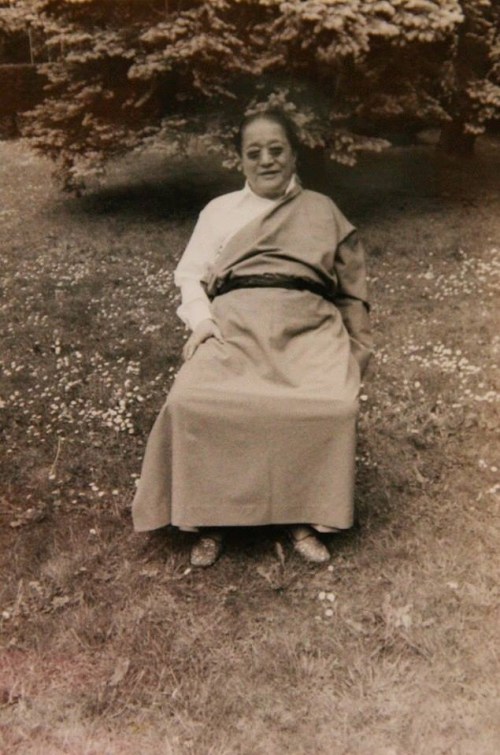
DudjomRinpoche Jigdral Yeshe Dorje Counsels from My Heart Shambhala
We use cookies on our website to give you the most relevant experience by remembering your preferences and repeat visits. By clicking “Accept”, you consent to the use of ALL the cookies.
This website uses cookies to improve your experience while you navigate through the website. Out of these, the cookies that are categorized as necessary are stored on your browser as they are essential for the working of basic functionalities of the website. We also use third-party cookies that help us analyze and understand how you use this website. These cookies will be stored in your browser only with your consent. You also have the option to opt-out of these cookies. But opting out of some of these cookies may affect your browsing experience.
Necessary cookies are absolutely essential for the website to function properly. These cookies ensure basic functionalities and security features of the website, anonymously.
Cookie
Duration
Description
cookielawinfo-checbox-analytics
11 months
This cookie is set by GDPR Cookie Consent plugin. The cookie is used to store the user consent for the cookies in the category "Analytics".
cookielawinfo-checbox-functional
11 months
The cookie is set by GDPR cookie consent to record the user consent for the cookies in the category "Functional".
cookielawinfo-checbox-others
11 months
This cookie is set by GDPR Cookie Consent plugin. The cookie is used to store the user consent for the cookies in the category "Other.
cookielawinfo-checkbox-necessary
11 months
This cookie is set by GDPR Cookie Consent plugin. The cookies is used to store the user consent for the cookies in the category "Necessary".
cookielawinfo-checkbox-performance
11 months
This cookie is set by GDPR Cookie Consent plugin. The cookie is used to store the user consent for the cookies in the category "Performance".
viewed_cookie_policy
11 months
The cookie is set by the GDPR Cookie Consent plugin and is used to store whether or not user has consented to the use of cookies. It does not store any personal data.
Functional cookies help to perform certain functionalities like sharing the content of the website on social media platforms, collect feedbacks, and other third-party features.
Performance cookies are used to understand and analyze the key performance indexes of the website which helps in delivering a better user experience for the visitors.
Analytical cookies are used to understand how visitors interact with the website. These cookies help provide information on metrics the number of visitors, bounce rate, traffic source, etc.
Advertisement cookies are used to provide visitors with relevant ads and marketing campaigns. These cookies track visitors across websites and collect information to provide customized ads.